
Which Dance Class Is Best for Your Child? The Research Has a Surprising Answer
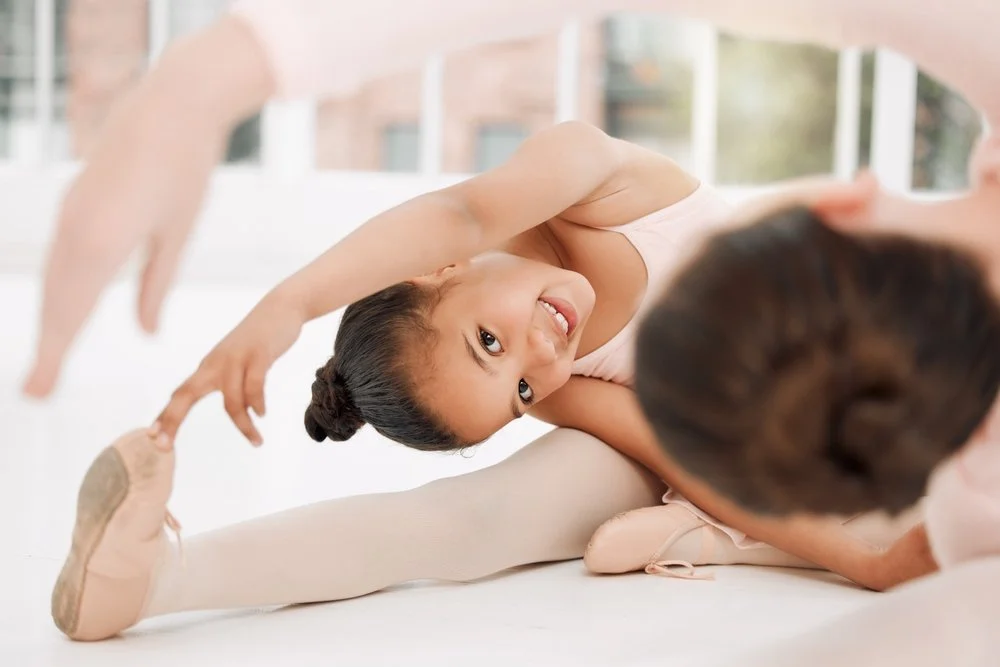
If you've ever found yourself comparing ballet to hip-hop, wondering whether one instructor is better than another, or trying to find the ideal class time for your child's schedule, you're not alone. Parents ask these questions all the time because they want to make the best possible choice for their child.
The surprising answer from newly published research is that the specific style, teacher profile, or class schedule may matter less than many parents think.
Which dance class is best for my child? Based on our research, there was no single dance style, instructor profile, or class time that stood out as uniquely associated with the mood pattern we observed. The most important finding was that the pattern appeared consistently across many different types of classes. For families, that means choosing a class your child is excited to attend may be more important than finding a supposedly "perfect" option.
What Parents Should Know Before Choosing a Dance Class
Mood was maintained or improved at a similar rate across tap, ballet, jazz, and hip-hop classes.
The pattern held across different instructors, from newer teachers to experienced veterans.
Beginner and advanced dancers showed a similar pattern.
The results were consistent across morning and evening classes, as well as weekdays and weekends.
The research suggests families can focus more on fit and enthusiasm than on finding a single "best" class.
For years, parents have told us a version of the same story. Their child arrives at dance class one way and leaves another. Sometimes they seem lighter, more relaxed, or simply happier than when they walked in.
Rather than relying on anecdotes, we wanted to examine that experience systematically. The results were peer-reviewed and published in Frontiers in Psychology.
Across 256 children and teenagers, ages five to 17, researchers collected more than 4,000 before-and-after mood measurements during a full season of dance classes. In 85.8% of classes, children's reported mood was either maintained or improved from the beginning of class to the end.
Why the Consistency Was the Most Important Finding
The consistency was the headline. When researchers analyzed the data, they looked closely at whether the pattern depended on specific characteristics of the class. It did not.
Mood was maintained or improved whether a child participated in tap, ballet, jazz, or hip-hop. The pattern also appeared across different instructors, proficiency levels, times of day, and days of the week.
That consistency matters because it suggests the observed association was not tied to one special class format or a single teaching style. Instead, it appeared across a wide variety of ordinary community dance experiences.
For parents wondering which dance class is best for their child, that may be the most reassuring result in the entire study.
Research Summary
More than 4,000 class observations were included.
Participants included 256 children and teenagers.
Mood was maintained or improved in 85.8% of classes.
The pattern held across dance styles.
The pattern held across instructors.
The pattern held across proficiency levels.
The pattern held across class times and days of the week.
What This Means for Families
The research suggests you can spend less energy trying to optimize every variable.
Many parents feel pressure to identify the ideal style, the perfect teacher, or the exact right class schedule. While those factors can influence your child's overall experience, the data did not point to one combination that stood above the rest.
Instead, families may benefit from focusing on questions such as:
Which class does my child seem excited about?
Which schedule works comfortably for our family?
Which environment feels welcoming and supportive?
Which class is my child likely to attend consistently?
A child who is enthusiastic about showing up week after week may gain more from that consistency than from being placed in a style someone else claims is the "best."
Understanding What the Study Does and Does Not Say
Dance participation was associated with better mood outcomes in this study, but the research does not prove that dance caused those changes.
That distinction is important.
This was an observational study. Researchers measured what happened in real-world classes rather than conducting a controlled experiment. Because of that design, the findings support an association between dance class participation and better mood outcomes, but they cannot establish direct causation.
We intentionally describe the findings carefully because families deserve accurate information, not exaggerated claims.
What we can say is that the pattern was strong, consistent, and robust enough to undergo independent peer review.
Why We Conducted the Research
Families deserve more than marketing language.
Our co-founder, Tiffany Henderson, began this research as the capstone project for her Master of Applied Positive Psychology degree at the University of Pennsylvania. The study was conducted with faculty collaborators there and has since been published in Frontiers in Psychology.
The work continues through a separate research collaboration with Stanford University that is examining how children learn and develop through dance.
Our goal has always been simple: provide evidence where possible and be transparent about what the evidence can and cannot tell us.
The Role of a Welcoming Dance Environment
A welcoming environment still matters.
The finding that no single style, instructor profile, or schedule stood out does not mean every class experience is identical. Rather, it suggests the observed pattern was not dependent on those specific variables.
Parents should still look for:
Teachers who communicate clearly and respectfully
An environment where children feel comfortable participating
Age-appropriate instruction
Opportunities for growth and learning
A studio culture that supports both skill development and enjoyment
Those factors help create the conditions in which children can fully engage with the class experience.
What Parents Can Stop Worrying About
Parents can stop worrying that there is one hidden "best" dance class they must discover.
The research suggests that the benefits associated with participation were not limited to a specific genre, instructor, proficiency level, or schedule.
That can be a freeing conclusion.
Instead of chasing a perfect formula, families can prioritize practical fit, enthusiasm, and consistency. Choosing a class your child genuinely enjoys may be one of the most productive decisions you can make.
Frequently Asked Questions
Which dance class is best for my child?
The research did not identify a single dance style as superior. Mood was maintained or improved across tap, ballet, jazz, and hip-hop classes, suggesting parents can focus on the style their child enjoys most.
Is ballet better than hip-hop for children?
The study did not find that one style stood out over another. The observed mood pattern appeared across multiple dance genres, including ballet and hip-hop.
Does the teacher matter?
A supportive and welcoming teacher is important, but the research found the pattern held across different instructors. No particular instructor profile emerged as uniquely associated with the results.
Are morning classes better than evening classes?
The study found similar patterns regardless of time of day. Morning and evening classes both showed the same general trend.
Do advanced dancers benefit more than beginners?
The pattern appeared across proficiency levels. Beginners and advanced dancers alike showed similar results in the data.
Does this research prove dance causes better mood?
No. This was an observational study. The findings show that dance participation was associated with better mood outcomes, but they do not prove causation.
The Bottom Line
If you've been asking yourself, "Which dance class is best for my child?" the research points toward a surprisingly simple answer.
There was no single style, instructor profile, or class schedule that stood apart from the others. The pattern appeared consistently across a wide range of classes.
Choose the class your child is excited to attend. Choose the schedule that fits your family's life. Choose the environment where they feel welcome and supported.
The evidence suggests you may not need to find the perfect class after all.
To read the full peer-reviewed study published in Frontiers in Psychology, visit: https://doi.org/10.3389/fpsyg.2026.1719704
