When Can My Child Start Dance? A Guide by Age, 2 Through 6
For many Frisco parents, the question is not whether dance could be fun for their child. It is whether age 2, 3, 4, 5, or 6 is the right time to begin. Between preschool schedules, activities around The Star, weekends at Frisco Square, and busy family routines across Collin and Denton counties, choosing the right starting point can make dance feel exciting instead of overwhelming.
The quick answer is that children can begin exploring dance as early as age 2, but the best class depends on developmental readiness, independence, attention span, and comfort in a group setting. At ages 2 and 3, dance usually centers on movement, music, imagination, and basic classroom habits. By ages 4 through 6, children are often ready for more structure, technique, terminology, and consistent skill-building.
What Frisco parents should know
Age matters, but readiness matters just as much. Two children who are the same age may have very different comfort levels in a dance classroom.
Younger dancers generally benefit from short, engaging classes built around music, movement, repetition, and imagination rather than technical perfection.
Families coming from areas such as Panther Creek, Grayhawk, Stonebriar, Prosper, or Little Elm should consider class timing and travel when choosing a schedule their child can attend consistently.
A child does not need prior dance experience to start at age 4, 5, or 6.
The best first class is one that matches the child's developmental stage and leaves them looking forward to returning.
What Is the Best Age to Start Dance?
The best age to start dance is typically between 2 and 6, with the right starting point depending on what parents want their child to experience. Younger children can explore rhythm and movement, while older preschoolers and early elementary students can begin developing greater coordination, technique, musicality, and classroom independence.
There is no single age at which a child is suddenly "ready" for dance. Readiness develops gradually.
For families in Frisco, starting earlier can be a gentle introduction to an organized activity before schedules become crowded with school, sports, and other commitments. Starting later is also completely reasonable. A 5- or 6-year-old beginner can still enter dance without needing years of previous training.
At Twinkle Star Dance Academy, we encourage families to think about the experience that best fits their child's current stage rather than worrying about whether they started at the "perfect" age.
What Is Dance Like for a 2-Year-Old?
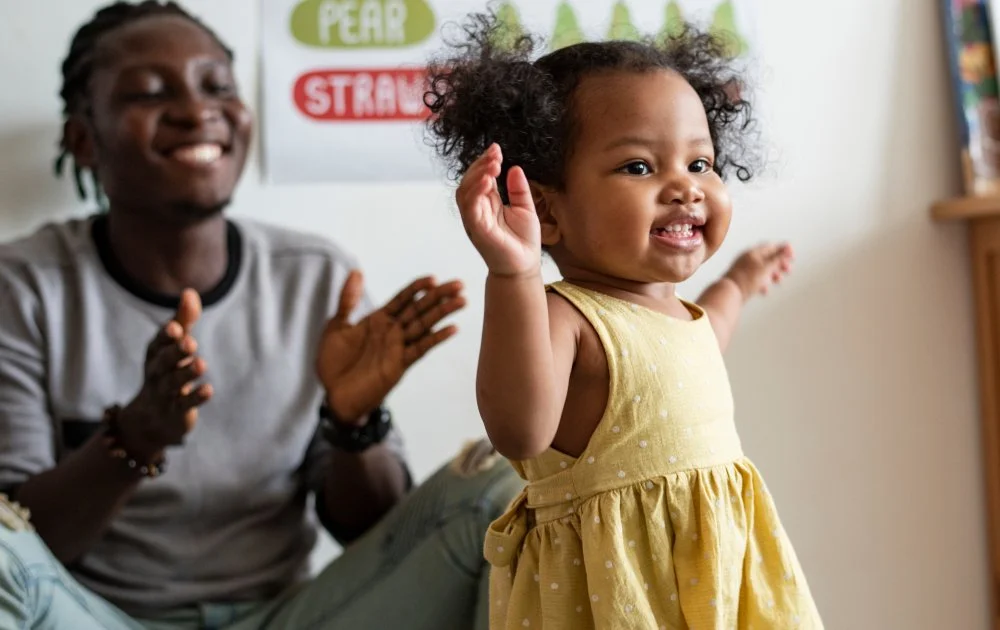
Dance for a 2-year-old should focus primarily on joyful movement, music, body awareness, and becoming comfortable with simple directions. At this age, the goal is usually not formal technique. A successful early dance experience helps a child associate movement and music with confidence, curiosity, and fun.
Two-year-olds are still developing balance, coordination, language, and the ability to participate in a group. A dance class may include activities such as marching, jumping, stretching, moving to different rhythms, pretending to be animals, or following simple movement patterns.
Parents should expect variation. One child may immediately join every activity, while another may spend several classes observing before participating more fully.
For a young dancer coming from a busy day at preschool or a drive across Frisco, timing matters too. A class scheduled near a child's usual nap or mealtime may be harder than the same class at a more comfortable time of day.
Is Age 3 a Good Time to Start Dance?
Age 3 is an excellent time to start dance because many children are beginning to follow short sequences, participate more independently, and understand basic classroom routines. Classes at this age can still be playful while introducing concepts such as taking turns, listening for musical cues, recognizing positions, and moving through space safely.
Three-year-olds often enjoy repetition, imaginative themes, and activities that have a clear beginning and end.
This is also an age when separation from a parent can vary widely. Some children walk confidently into class. Others need time to adjust to a new instructor, room, or group.
Families in neighborhoods from Panther Creek to areas near Frisco Square may find that consistency makes the transition easier. Attending regularly helps the class environment become familiar and predictable.
What Can a 4-Year-Old Learn in Dance?
A 4-year-old can begin learning more recognizable dance skills while still benefiting from imaginative, age-appropriate instruction. Many children at this age can remember short combinations, respond to corrections, work on balance and coordination, and begin connecting basic dance vocabulary with specific movements.
Four is often a transition year between purely exploratory movement and more structured instruction.
Children may be ready to practice skills such as pointed feet, basic positions, controlled jumps, simple turns, rhythm changes, and short sequences. Depending on the class format, they may also be introduced to more than one dance style.
Progress is rarely perfectly linear. A child may master one movement quickly while needing months to become comfortable with another. The goal should be steady development rather than comparison with classmates.
Is Age 5 Too Late to Start Dance?
Age 5 is not too late to start dance. In fact, many 5-year-olds are developmentally ready to absorb instructions, remember combinations, recognize musical patterns, and practice skills with greater intention. Beginners at this age can make meaningful progress without having taken classes as toddlers or preschoolers.
For Frisco families beginning dance around kindergarten, age 5 can be a particularly practical entry point because children already have experience with classroom expectations.
They may be more comfortable waiting their turn, moving between activities, listening to an instructor, and practicing a skill several times.
At this stage, parents can also begin noticing what styles and types of movement their child enjoys most rather than choosing based only on what is available for very young dancers.
What Changes When a Child Starts Dance at Age 6?
At age 6, dance can become more focused because children are often ready for longer combinations, clearer technique, greater musical awareness, and more detailed instruction. A 6-year-old beginner can still start comfortably, while children with previous experience may be ready to build on the foundations they developed in earlier classes.
Six-year-olds often have enough school experience to understand that improvement comes through practice.
They may begin noticing details such as posture, timing, foot placement, alignment, or how several movements connect together. They can also start developing stronger preferences for particular dance styles.
For families balancing school and activities throughout Frisco, consistency becomes increasingly helpful at this age. A schedule that works reliably for the family is often more valuable than choosing a class that repeatedly conflicts with homework, dinner, or other commitments.
How Do I Know If My Child Is Ready for Dance?
A child may be ready for dance when they show interest in music and movement, can participate in a group for short periods, and are becoming comfortable following simple directions. They do not need perfect attention, coordination, or independence before beginning, especially at ages 2 through 4.
Signs your child may be ready include:
Dancing, spinning, jumping, or moving whenever music plays.
Copying movements they see adults or other children perform.
Enjoying music-based games or pretend play.
Showing curiosity about dance classes or dancers.
Following one- or two-step directions most of the time.
Becoming comfortable participating in activities with other children.
Asking to return after trying a class or dance activity.
A child who is shy at first is not necessarily unready. Some children simply need more time to observe a new environment.
What Should Parents Expect From the First Few Classes?
Parents should expect the first few dance classes to be an adjustment period rather than an immediate measure of long-term success. Young children may watch, hesitate, forget directions, become distracted, or participate enthusiastically one week and cautiously the next.
That variation is normal in early childhood activities.
A child coming to class after preschool, kindergarten, or a long drive from McKinney, Prosper, or Little Elm may also behave differently depending on energy level that day.
Look for progress across several classes instead of judging the entire experience from one afternoon. Becoming familiar with the room, instructor, routine, and other dancers can make a significant difference.
Common Mistakes Parents Make When Starting Dance
The most common mistakes are choosing a class that does not fit the child's developmental stage, expecting immediate technical progress, or comparing one young dancer with another. A better approach is to focus on whether the child is becoming more comfortable, engaged, coordinated, and confident over time.
Mistake: Choosing only by age.
Consequence: A class may be technically age-appropriate but not match the child's current independence or attention span.
Better approach: Consider age, personality, previous group experiences, and interest together.
Mistake: Expecting perfect participation immediately.
Consequence: Parents may assume a hesitant first class means their child dislikes dance.
Better approach: Give younger children time to learn the classroom routine.
Mistake: Comparing classmates.
Consequence: Normal differences in development can feel like problems when they are not.
Better approach: Watch your own child's progress over weeks and months.
Mistake: Overscheduling.
Consequence: Even a wonderful class can become difficult when a child arrives tired or rushed.
Better approach: Choose a time that works with school, meals, naps, and your normal Frisco-area commute.
A Common Local Scenario
A common Frisco scenario is a parent deciding between starting dance during the preschool years or waiting until kindergarten. Both choices can work well. The better choice usually depends on the child's interest, comfort in group settings, family schedule, and the type of class available.
For example, a 3-year-old who constantly moves to music may enjoy an introductory class even if they are still learning how to follow directions. Another child may become interested at 5 after seeing a sibling or friend dance.
Neither child is automatically ahead or behind.
How Should I Choose a Dance Class for My Child?
The right dance class should match your child's age, current abilities, attention span, and level of independence while providing room to grow. Parents should also consider class length, schedule, teaching approach, and whether the environment makes their child feel comfortable participating.
Ask what a typical class includes and what skills are expected at that age.
For younger dancers, look for developmentally appropriate movement rather than pressure to perform advanced skills. For children closer to 5 or 6, consider whether the class provides a clear progression as their coordination and interest develop.
Ready to explore dance for your child?
View age-appropriate class options or contact us to find a good starting point
Starting Earlier vs. Starting Later
Starting earlier gives children more time to become familiar with movement classes, while starting later may allow them to enter with greater focus and independence. Neither option guarantees better results. The strongest choice is the one that fits the individual child and allows them to participate consistently.
A 2- or 3-year-old may gain comfort with music, movement, and group routines.
A 5- or 6-year-old may enter ready to remember combinations and understand technique more quickly.
Parents do not need to rush because another family started sooner. A positive beginning matters more than checking dance off a developmental timeline.
What Areas Do You Serve?
Families looking for children's dance classes in Frisco may also be traveling from surrounding Collin and Denton County communities. Nearby areas such as Prosper, Little Elm, and McKinney are part of the broader North Texas community where families often compare children's activities and schedules.
For parents near Stonebriar, The Star, Frisco Square, Panther Creek, and surrounding neighborhoods, choosing a practical class time can make regular attendance easier.
What Happens If I Wait Too Long to Enroll?
Waiting a year or two usually does not prevent a child from becoming a successful beginner, but repeatedly postponing an activity they genuinely want to try can mean missing a period when they are especially enthusiastic about movement and music. There is no need to create urgency around a specific birthday.
Instead, watch for interest and readiness.
If your child regularly asks about dance, copies dancers, or lights up when music starts, that may be a useful sign that it is worth exploring an age-appropriate class now.
Help your child start at a comfortable pace.
Contact us to discuss the right class for your child's age and experience
Frequently Asked Questions
Can a 2-year-old take dance classes in Frisco?
Yes, some 2-year-olds are ready for an introductory movement-based dance experience. At this age, parents should expect classes to emphasize music, coordination, imagination, and simple participation rather than formal technique. The best fit depends on the child's development and the structure of the specific class being considered.
What is the most common age to begin dance?
Children often begin dance during the preschool or early elementary years, but there is no single correct starting age. Ages 2 through 6 each offer different advantages. Parents should choose based on readiness, interest, independence, and the kind of experience they want their child to have.
Does my child need preschool experience before starting dance in Frisco?
No, preschool experience is not automatically required for a child to begin dance. However, experience participating in a group, listening to another adult, and following simple directions can make the adjustment easier. Younger children who are new to group activities may simply need additional time to become comfortable.
Is 4 a good age to begin ballet or another structured dance style?
Yes, age 4 can be a good time to begin more structured dance instruction because many children can follow short sequences and understand basic corrections. Classes should still remain age-appropriate, engaging, and realistic about attention span while gradually introducing vocabulary, coordination, musicality, and technique.
Can my 5-year-old start dance without previous classes?
Yes, a 5-year-old can absolutely begin dance without previous training. Kindergarten-age beginners often bring stronger listening skills, body awareness, and classroom familiarity than younger children. Families in Frisco should focus on choosing an appropriate beginner-level class rather than worrying about catching up with children who started earlier.
Is 6 too old to start dance?
No, age 6 is still an excellent time to start dance. Children beginning at 6 may be able to understand instructions and technical concepts more quickly than younger beginners. They can develop fundamentals from the beginning while exploring which dance styles they enjoy and want to pursue further.
How often should a young child attend dance class?
For many young beginners, a consistent weekly class can provide enough repetition to become familiar with routines and build foundational skills. The right schedule depends on the child's age, goals, energy level, and other commitments. Families should prioritize a schedule they can maintain comfortably rather than adding unnecessary activities.
How can I tell whether my child likes dance or is just nervous?
Look at your child's attitude over several classes rather than relying on the first visit. A nervous child may still talk positively about the class, practice movements at home, or ask when they are going back. Consistent distress is different from ordinary hesitation and may signal that another format or later start would be better.
Find the Right Dance Starting Point for Your Child
Starting dance should feel like an exciting new experience, not a race to begin at the earliest possible age. Whether your child is 2 and discovering movement or 6 and ready for more focused instruction, we can help Frisco families explore an age-appropriate place to begin.
Give your child a confident start in dance.
Choose a class that matches their age, comfort level, and growing interest in movement.
